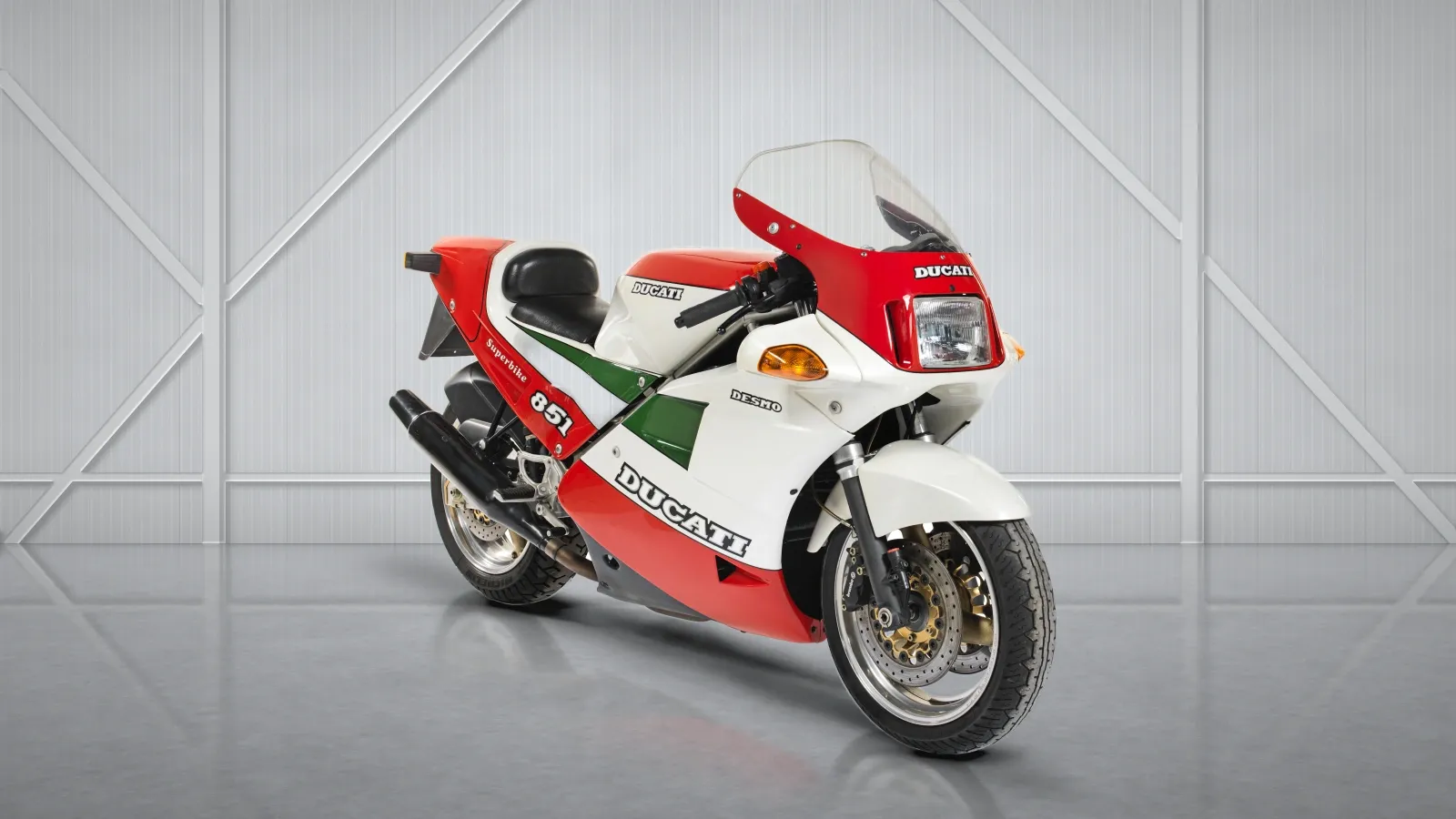
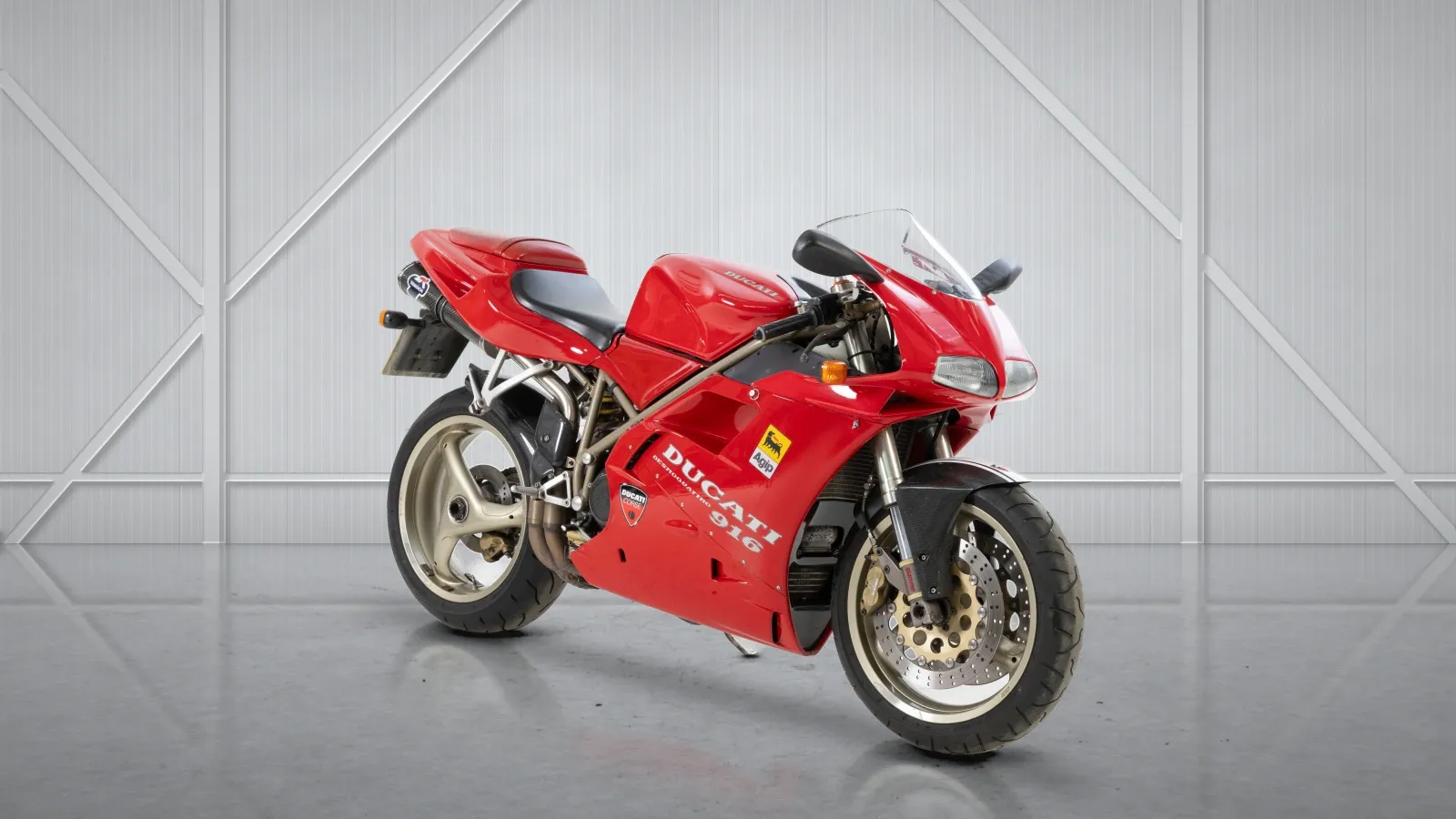
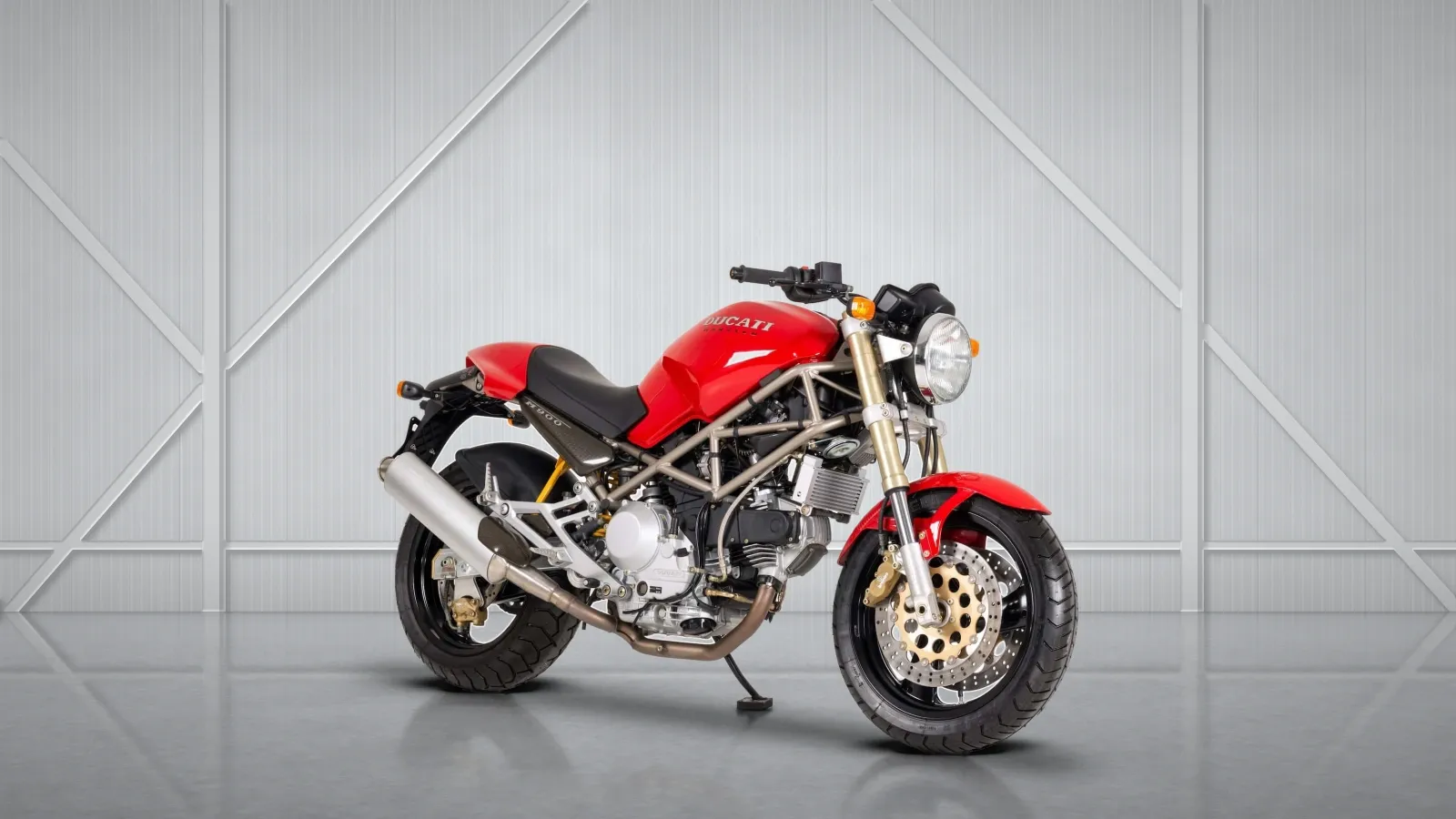
Two cylinders set in a V share one basic arrangement, but there is no single V-twin recipe. Ducati's older 851, 916 and Monster 900 road engines sit alongside Aprilia's 1999 RSV Mille, whose 60° V-twin takes a different approach to packaging. Ducati's familiar L-twin name describes the orientation of its V arrangement; it does not make the engine a separate cylinder-layout family.
The 1998 Aprilia RS 250 is the one that makes you look twice. Aprilia's period use and maintenance manual specifies a 90° V, two-cylinder engine with an exhaust-port valve and separate oil lubrication. It is a two-stroke road motorcycle. That's an entirely different combustion cycle from the larger four-stroke Ducati and RSV Mille twins, with different lubrication and exhaust-port engineering; cylinder arrangement alone is a poor guide to what the rider is dealing with.
A V4 adds another pair of cylinders, rather than representing a fixed step up in performance from every V-twin. In a parallel twin the two cylinders sit side by side rather than opening into a V. If you are comparing an earlier twin-cylinder superbike with a later four-cylinder one, look at the precise generation, engine construction and road specification. The useful distinction lies in what that particular engine does, not in treating two cylinders or four as a shortcut to a riding verdict.