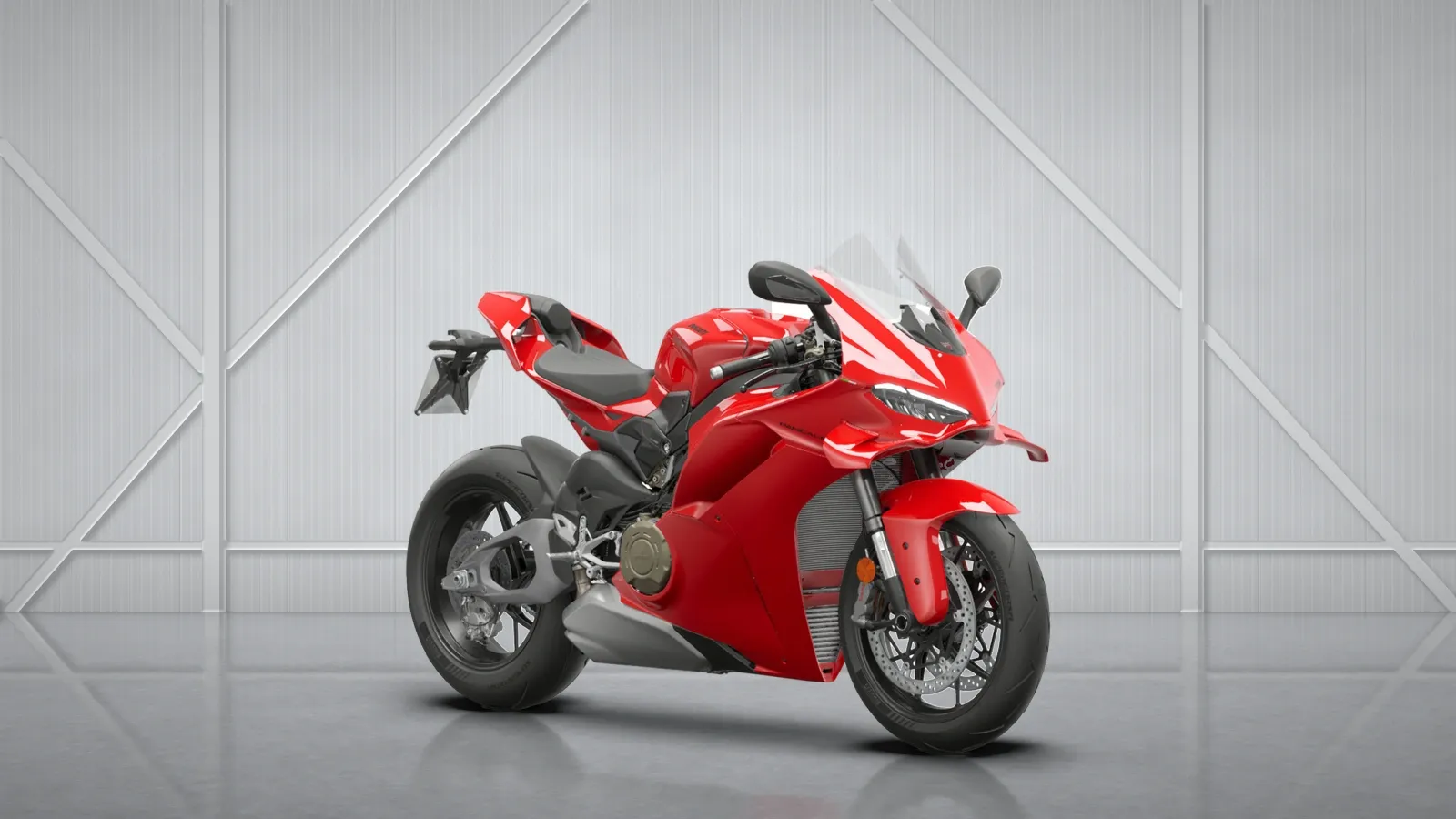
What is the Ducati 916?
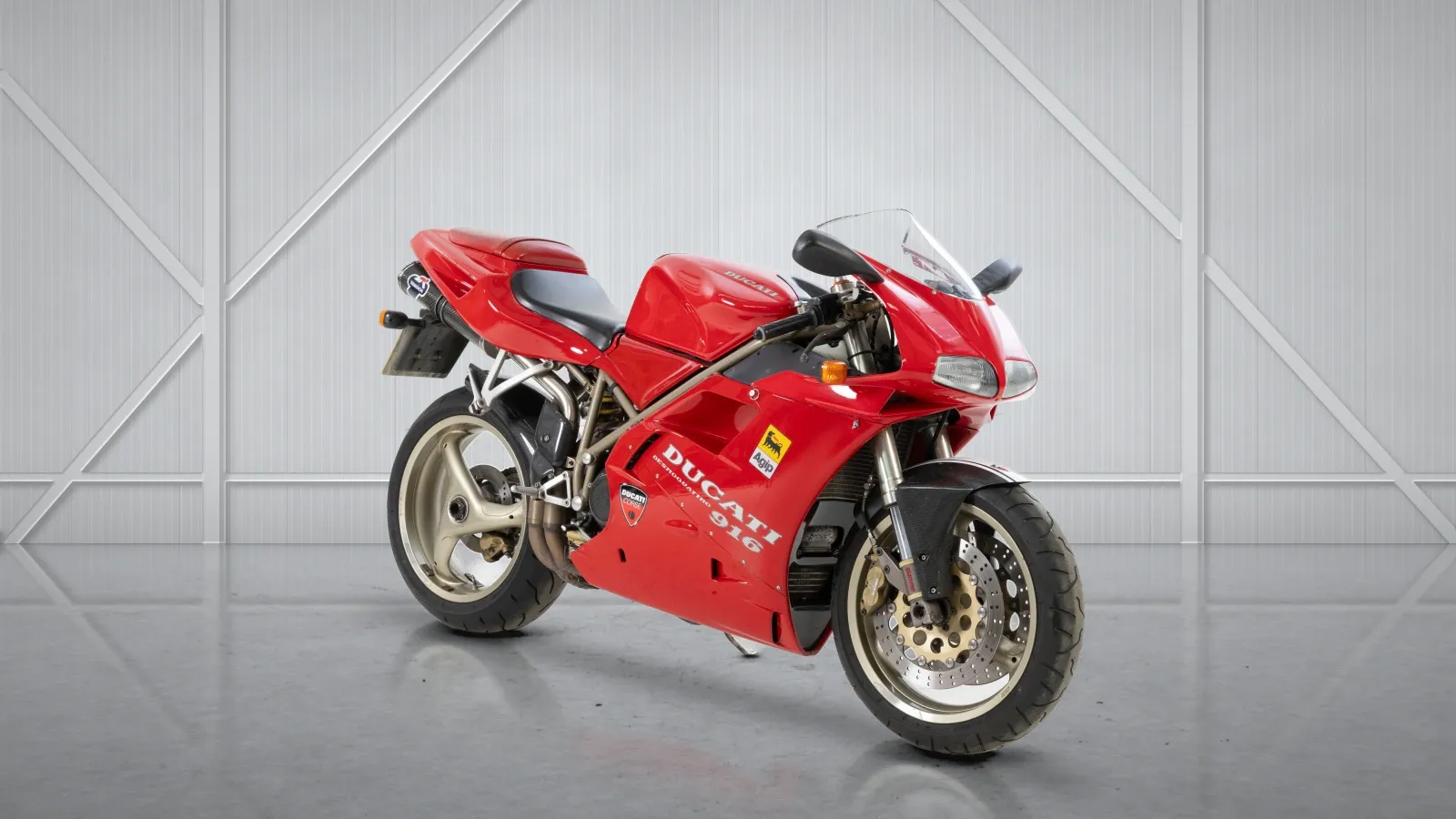
The Ducati 916 is easy to recognise and surprisingly easy to mis-specify. Ducati unveiled Tamburini’s design at the Milan Motorcycle Show in October 1993 and put the road superbike into production in 1994. Ducati’s own heritage material treats it as the start of the road family that later continued through the 996 and 998.
The name needs care because that same shape sits around several very different motorcycles. A standard road 916 isn’t automatically an SP, Senna, SPS, 955 or factory race bike just because the fairing and basic family look familiar. Get the version wrong and the specification goes wrong with it.
Which 916 is the standard road reference?
The standard road 916 was the Strada. Ducati's period workshop manual uses the formal name '916 Monoposto STRADA' and abbreviates it as 916 STR., while listing 916 Senna, 916 Sport Production and 916 Biposto separately.
Monoposto and Biposto identify single-seat and two-seat road configurations. No published figure separates the two, and Ducati's archive indexes a 1994 Biposto manual alongside 1994 Desmoquattro material. Named editions such as SP, Senna and later SPS remain separate because their engine, suspension or homologation specification can differ.
The 916 cc Desmoquattro engine
Ducati lists the road 916 at 916 cc and 114 hp at 9,000 rpm. Period road testing gives the same basic 94 x 66 mm engine dimensions and an 11.0:1 compression ratio for the standard motorcycle. Alan Cathcart reported Ducati's claimed 115 hp at the crank at 9,000 rpm, while Cycle World measured 105 rear-wheel horsepower at 9,000 rpm on its 1994 test bike. Ducati's 114 hp and Cathcart's 115 hp are manufacturer crank claims; Cycle World's figure is a rear-wheel measurement.
The engine used liquid cooling, twin overhead camshafts, four desmodromically controlled valves per cylinder and Weber-Marelli electronic fuel injection. Cycle World's 1994 road test used one injector per cylinder.
Six speeds, dry clutch and chain drive
The standard road 916 used a six-speed transmission, a dry multi-plate clutch and chain final drive. Cycle World's 1994 test described the gearbox as slick-shifting, while Cathcart called the gearchange precise and clean.
The six-speed gearbox is well established for the 1994 road bike. Exact internal ratios for the standard road 916 remain unconfirmed.
Chassis, geometry, suspension and brakes
The 916 used a chrome-molybdenum steel trellis frame, a bolt-on aluminium rear subframe and an aluminium single-sided swingarm. Period road tests describe a 55.5-inch wheelbase, equivalent to about 1,410 mm, with an adjustable steering-head angle of 24 or 25 degrees and corresponding trail of about 3.7 or 3.94 inches.
The first production road test used a 43 mm Showa upside-down fork with preload, compression and rebound adjustment, and a Showa rear shock with a remote reservoir and the same three main adjustment functions. Cycle World recorded twin 12.6-inch front discs with Brembo calipers and an 8.7-inch rear disc with a two-piston caliper.
17-inch wheels and period tyre fitment
Cycle World's 1994 U.S. test bike used a 3.5-inch front wheel with a 120/70-17 Michelin TX11 and a 5.5-inch rear wheel with a 190/50-17 Michelin TX23. A period UK road-test account also described 120/70 front and 190/50 rear tyres, with either Michelin or Pirelli rubber offered.
Period road accounts agree on 120/70-17 front and 190/50-17 rear. Tyre brand and model varied between Michelin and Pirelli references, so one test bike's fitted tyre model does not describe every 916.
What the 1994 road tests found
Alan Cathcart rode what he described as the first road-registered production 916 to leave the Bologna factory before the official launch. He found a compact motorcycle with light direction changes, unusually compliant suspension for a hard-edged superbike and a sporting riding position that remained comfortable over a 190-mile day.
Cycle World's July 1994 test reached similar conclusions about the standard road bike's steering and engine. Its test recorded a 10.72-second quarter-mile at 130.62 mph and a 1:31.14 lap at Willow Springs with Doug Toland riding. The same test also found the rear shock too lightly damped for hard track use and criticised excessive brake-lever travel on circuit.
Strada, Biposto, SP, Senna and SPS are not one specification
Ducati's period workshop manual separates 916 Monoposto Strada, 916 Biposto, 916 Sport Production and 916 Senna as named road configurations. Monoposto and Biposto distinguish seat and bodywork arrangements within the standard road 916; SP, Senna and later SPS do not share one specification with it.
The SP was the higher-performance homologation-oriented road version. Period reporting and later specialist histories give it more power and different race-focused hardware than the standard Strada. Ducati's official Senna history records a first 300-bike special series announced in 1994, followed by further series in 1997 and 1998.
The later SPS route is different again: 916 SPS motorcycles used a larger 996 cc engine despite retaining 916 in the model name. The U.S.-market 955/SPA and factory Corse/F94/F96 motorcycles were separate homologation or race configurations. Ducati's Heritage archive also lists a separate Racing entry called '916 Superbike' at 996 cc, 144 hp at 12,000 rpm, 300 km/h and 157 kg dry. Those figures do not describe the standard 1994 Strada.
The WorldSBK relationship
The 916 road family was developed beside Ducati's production-based racing programme, but the championship motorcycles were not standard road Stradas. Ducati's 916 F94 heritage page attributes four Manufacturers' titles to the 916 in 1994, 1995, 1998 and 1999. Dedicated heritage pages identify factory race motorcycles such as the 916 F94 and 916 F96 separately from the road 916.
The higher-performance SP and dedicated race configurations carried their own specification and competition record.
1993 debut, 1994 production and the later 916 family
Ducati says the 916 made its public debut at the Milan Motorcycle Show in October 1993. Production-road evidence begins in 1994: Cathcart's pre-launch ride used the first road-registered production 916, and Ducati later described 1994 as the year the design reached industrialisation.
The production-market introduction is therefore 1994. Ducati's heritage archive labels the 916 family 1994-1998, but the exact end date of the 1994 road specification is less clear because named editions overlap the family. The standard road model is historical and discontinued; the precise reference-configuration end year remains unsettled.
Weight, fuel and top speed
Ducati's current heritage page gives the 916 a maximum speed of 260 km/h and a dry weight of 195 kg. The period workshop manual also shows 260 km/h for the 916 STR./S/BIP. grouping, so 260 km/h is a strong manufacturer figure for the road family.
Weight needs more care. Cathcart reported 436 lb - about 198 kg - with water, oil and battery but no fuel on the first production road bike. That is not the same measurement basis as Ducati's current 195 kg dry figure, so the two figures are not comparable.
The period workshop manual lists a 17-litre fuel quantity for the 916 family.
Current status and buying a Ducati 916 today
The Ducati 916 is a historical, discontinued motorcycle. Ducati continues to present it through its heritage archive, but heritage-page presence is not evidence of current production, stock or orderability.
If you’re looking at a surviving 916, establish the exact version before you compare specifications. Single- or twin-seat bodywork, frame and engine numbers, factory documentation, suspension, wheels, exhaust, carbon parts and any edition plaque can help separate a standard road bike from an SP, Senna, SPS, 955 or modified example.
Hagerty’s UK buying guide puts age and service history ahead of a single reliability score: cambelt and valve-clearance maintenance, regulator/rectifier and starting-system condition, electrical connectors, crash damage, fuel-tank paint condition, suspension leaks and service-item wear. In other words, judge the bike and its history rather than giving every 916 the same verdict.