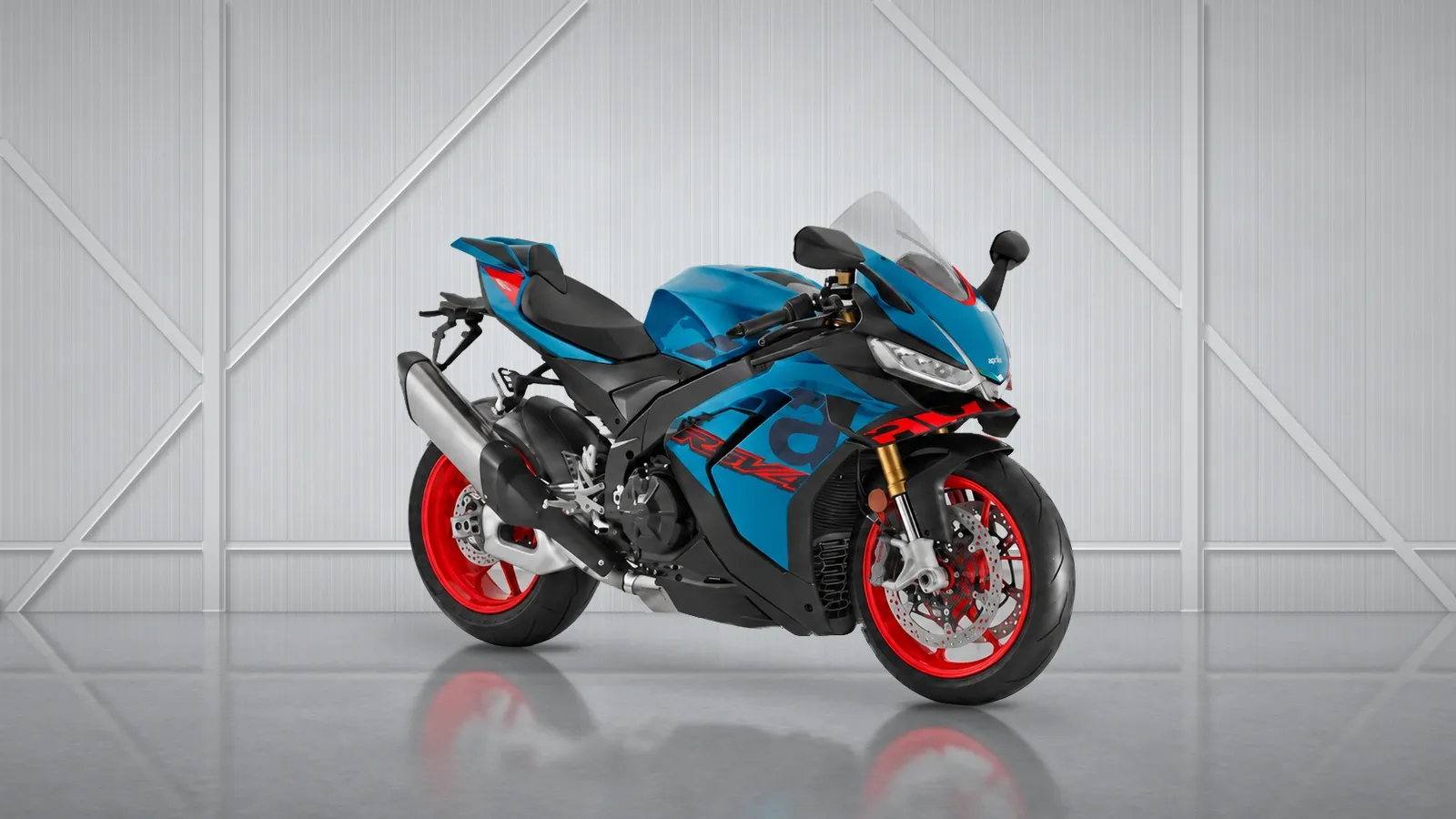
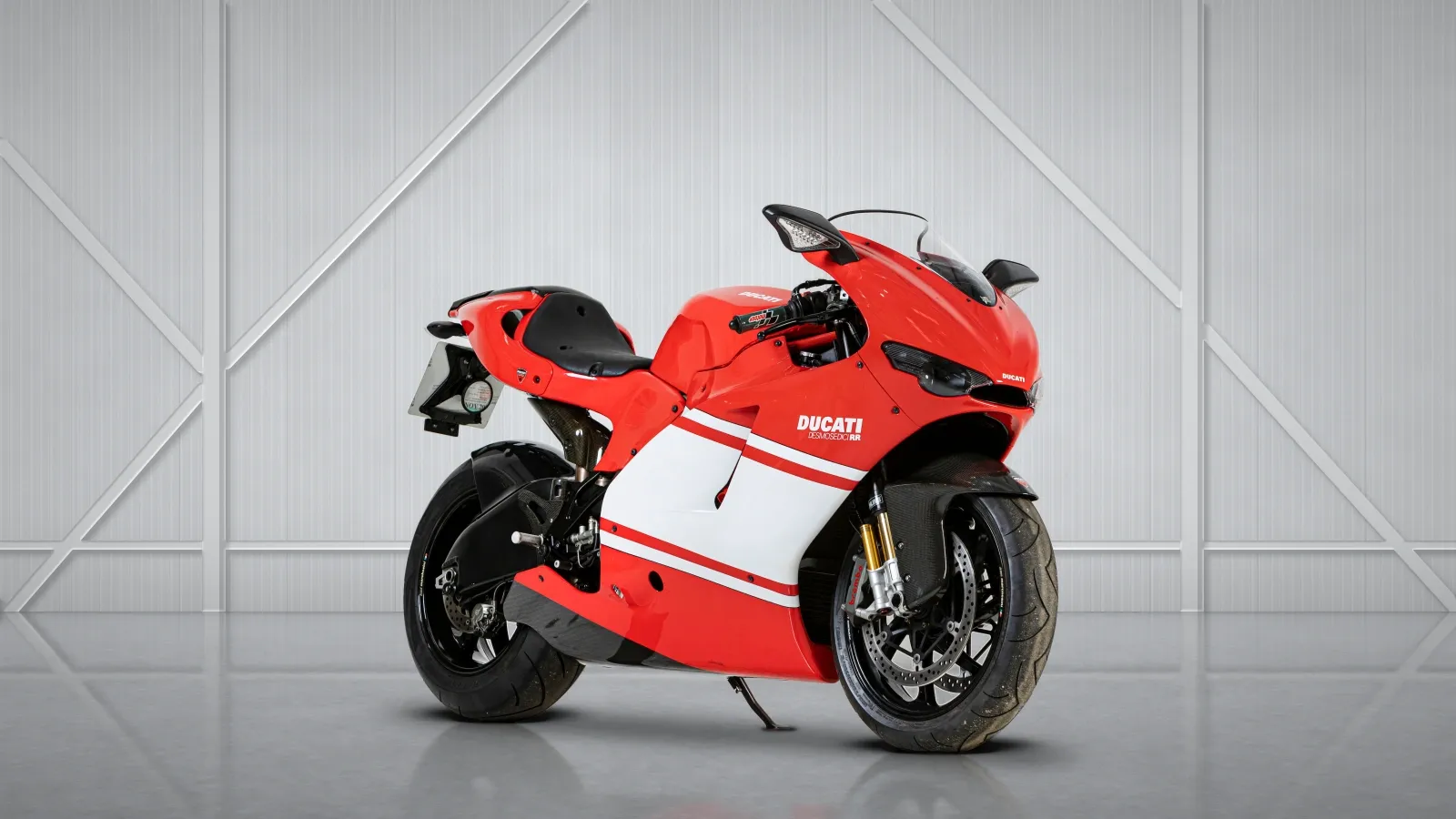
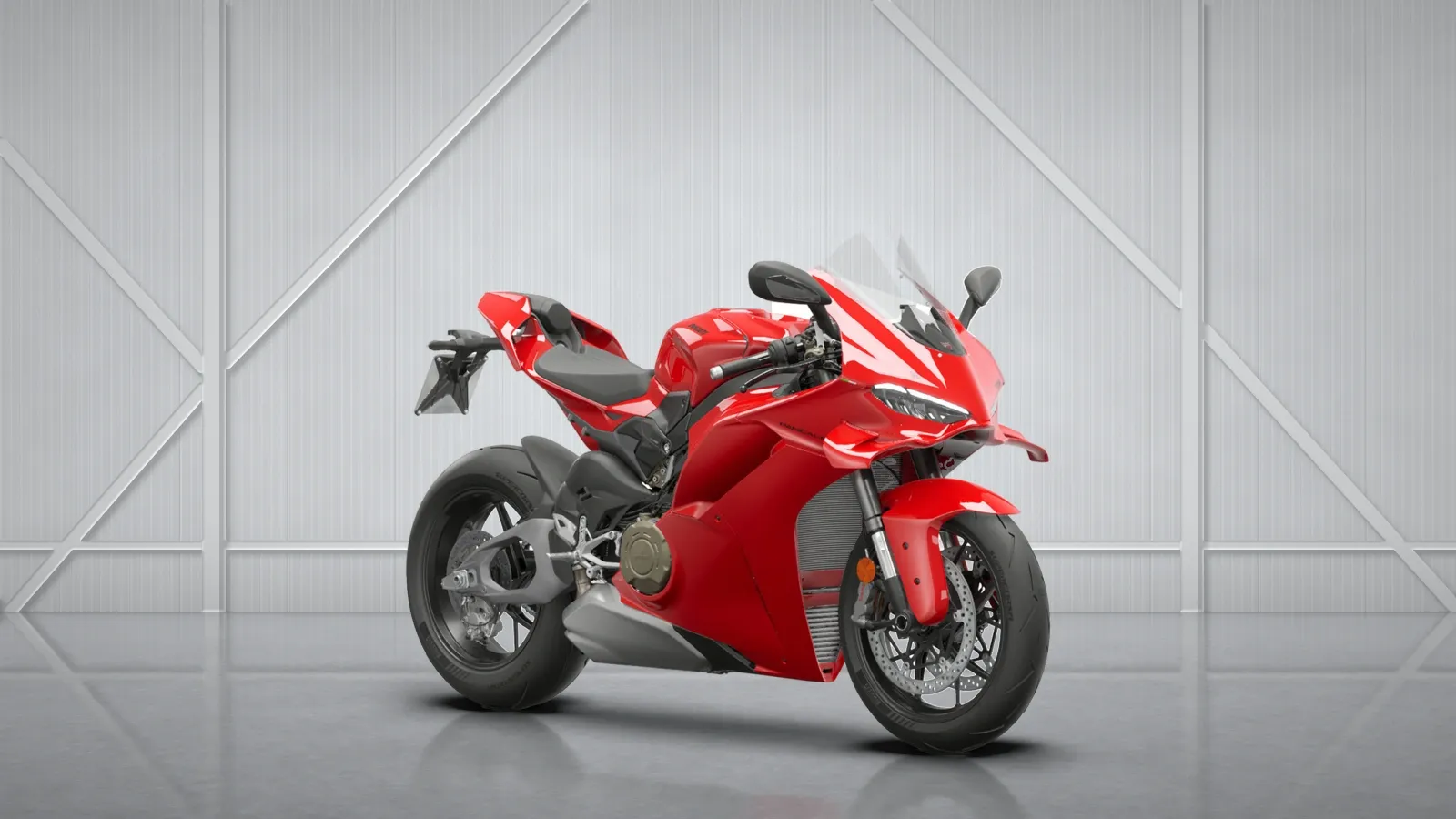
Four cylinders arranged in two banks give a V4 its basic shape. They don't tell you the angle between the banks, how its crankshaft turns or what the motorcycle will feel like when you open the throttle. Ducati's UK MY25 Panigale V4 uses a 90° Desmosedici Stradale with a counter-rotating crankshaft. Aprilia's current standard Tuono V4 takes a different route with a 65° V4 and road-focused rider packaging. Same cylinder count, different engineering decisions.
The Ducati Desmosedici RR, Panigale V4, Aprilia RSV4 and Tuono V4 offer four quite different ways to encounter this engine layout. A counter-rotating crankshaft, where specified, turns against the wheels and can help counter their gyroscopic effect; that is an exact engine feature, not something every V4 has. Compare a V4 with an inline-four and the immediate mechanical difference is how the cylinders are arranged. Compare it with a V-twin and you are comparing four cylinders with two. Neither comparison alone tells you the power curve.
For a rider, packaging and the job of the motorcycle matter as much as its engine diagram. The Tuono's half-fairing and upright riding position make a different road proposition from the faired Panigale, even before you consider their individual engine calibration. Road engines, homologated production models and factory race machines must also be kept separate: sharing a model-family name is not proof of an identical engine or current championship eligibility.