What is the Ducati Panigale V4?
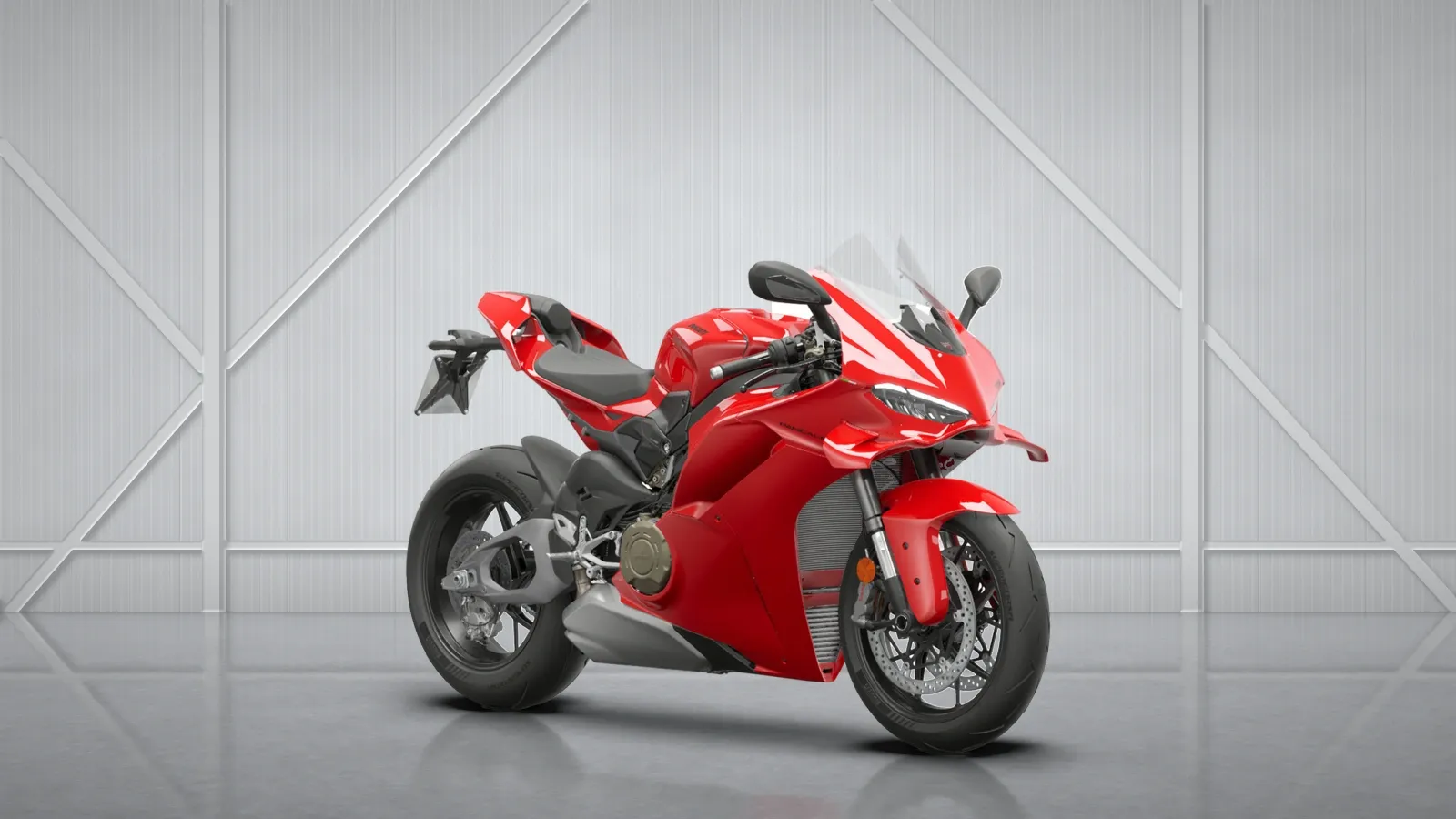
The Ducati Panigale V4 is Ducati’s 1,103 cc flagship road superbike, but the badge now covers several generations and a long list of adjacent versions. Here, Panigale V4 means the standard UK/EU MY25 motorcycle: the seventh-generation bike unveiled in July 2024. The electronically suspended V4 S, 998 cc V4 R homologation model, SP/SP2 specials and other limited editions remain separate.
The Panigale V4 name arrived on the market in 2018 and Ducati has revised it repeatedly since. So a figure only means something once you know which generation produced it. The seventh-generation bike changes the chassis, swingarm, geometry, electronics and engine calibration from the earlier Panigale V4s.
The 1,103 cc Desmosedici Stradale
The standard seventh-generation Panigale V4 uses Ducati’s 1,103 cc Desmosedici Stradale, a 90-degree liquid-cooled V4 with a counter-rotating crankshaft and four valves per cylinder. Bore and stroke are 81 x 53.5 mm and the compression ratio is 14.0:1.
Ducati lists 158.9 kW, or 216 hp, at 13,500 rpm and 120.9 Nm at 11,250 rpm. The engine uses twin injectors per cylinder, ride-by-wire elliptical throttle bodies and variable-length intake ducts.
Six-speed transmission and quickshifter
The Panigale V4 has a six-speed gearbox with Ducati Quick Shift up/down 2.0. Primary drive is by straight-cut gears at 1.80:1, while final drive is a 520 chain with a 16-tooth front and 41-tooth rear sprocket. Ducati publishes the road gearbox ratios as 36/15, 34/17, 33/19, 32/21, 30/22 and 27/22 from first to sixth.
The standard motorcycle uses a hydraulically controlled wet multi-plate clutch with slipper and self-servo functions. Dry clutches seen on some Panigale specials or in Ducati Performance accessories are not standard equipment on the standard Panigale V4.
What the V4 S, V4 R and special versions change
The current V4 and V4 S share the same 1,103 cc engine figures, but the chassis equipment is not interchangeable. The standard V4 uses a fully adjustable 43 mm Showa Big Piston Fork, a fully adjustable Sachs rear unit and light-alloy wheels. The V4 S replaces those with electronically controlled Öhlins suspension, forged aluminium wheels and a lithium battery, and Ducati lists it four kilograms lighter on the same “wet weight no fuel” basis.
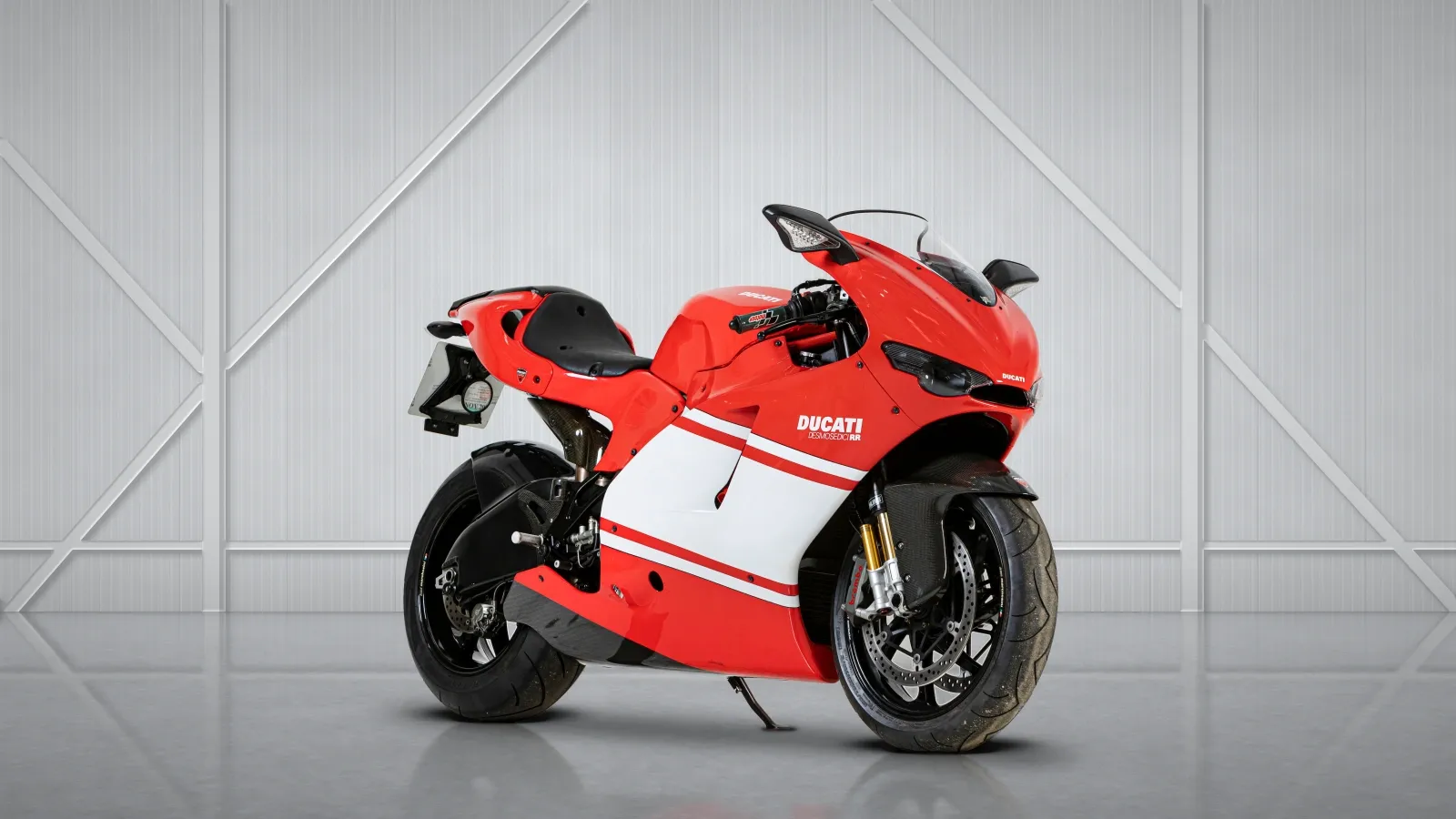
The Panigale V4 R is a different technical subject: its 998 cc Desmosedici Stradale R is developed around WorldSBK homologation requirements. SP/SP2, Superleggera V4, Superleggera V4 Centenario, Tricolore and Panigale V4 Lamborghini derivatives each carry their own equipment.
Front frame and hollow symmetrical swingarm
The seventh-generation Panigale V4 retains Ducati’s aluminium-alloy Front Frame concept but uses a substantially revised structure. Ducati says lateral stiffness was reduced while longitudinal stiffness was retained, aiming to improve front-end feel at high lean angles.
At the rear, the previous single-sided layout gives way to the aluminium Hollow Symmetrical Swingarm. Ducati attributes a 37% reduction in lateral stiffness to the new component and pairs it with a pull-rod rear suspension layout. On the standard V4, damping remains mechanically adjustable rather than electronically controlled.
Brakes, wheels and tyres
Braking is handled by twin 330 mm semi-floating front discs and radially mounted four-piston Brembo Hypure monobloc calipers, with a 245 mm rear disc and two-piston caliper. Race eCBS is part of the standard electronic safety equipment.
The base Panigale V4 uses five-spoke light-alloy wheels measuring 3.50 x 17 at the front and 6.00 x 17 at the rear. Factory tyre fitment is Pirelli Diablo Supercorsa SP-V4 in 120/70 ZR17 and 200/60 ZR17 sizes.
Aerodynamics, ergonomics and electronics
The seventh-generation fairing integrates double-profile wings into the front bodywork. Ducati says the redesign reduces aerodynamic resistance by 4% while retaining the previous model’s aerodynamic load; those are Ducati’s own development figures.
The 17-litre aluminium fuel tank, seat and footpeg positions were also revised. The seat is longer and wider, while the footpegs sit 10 mm further in on each side. Hot-air extraction ducts from the rear cylinder bank are intended to improve rider thermal comfort.
Electronic systems include Riding Modes, Power Modes, Race eCBS, Ducati Vehicle Observer, traction and wheelie control using DVO logic, slide control, engine-brake control, Ducati Power Launch and DQS 2.0. A 6.9-inch TFT display uses a 1280 x 480-pixel panel with optical bonding.
Dimensions, fuel and mass
Ducati gives the standard seventh-generation Panigale V4 a 1,485 mm wheelbase, 24-degree rake, 98 mm trail and an 850 mm seat height. Fuel capacity is 17 litres. Suspension travel is 125 mm at the front and 130 mm at the rear.
The manufacturer’s mass figure is 191 kg on a “wet weight no fuel” basis. That wording matters: it is not interchangeable with dry, kerb or fully fuelled mass, and the same basis is used when Ducati lists the lighter V4 S.
From the 2018 launch to the seventh generation
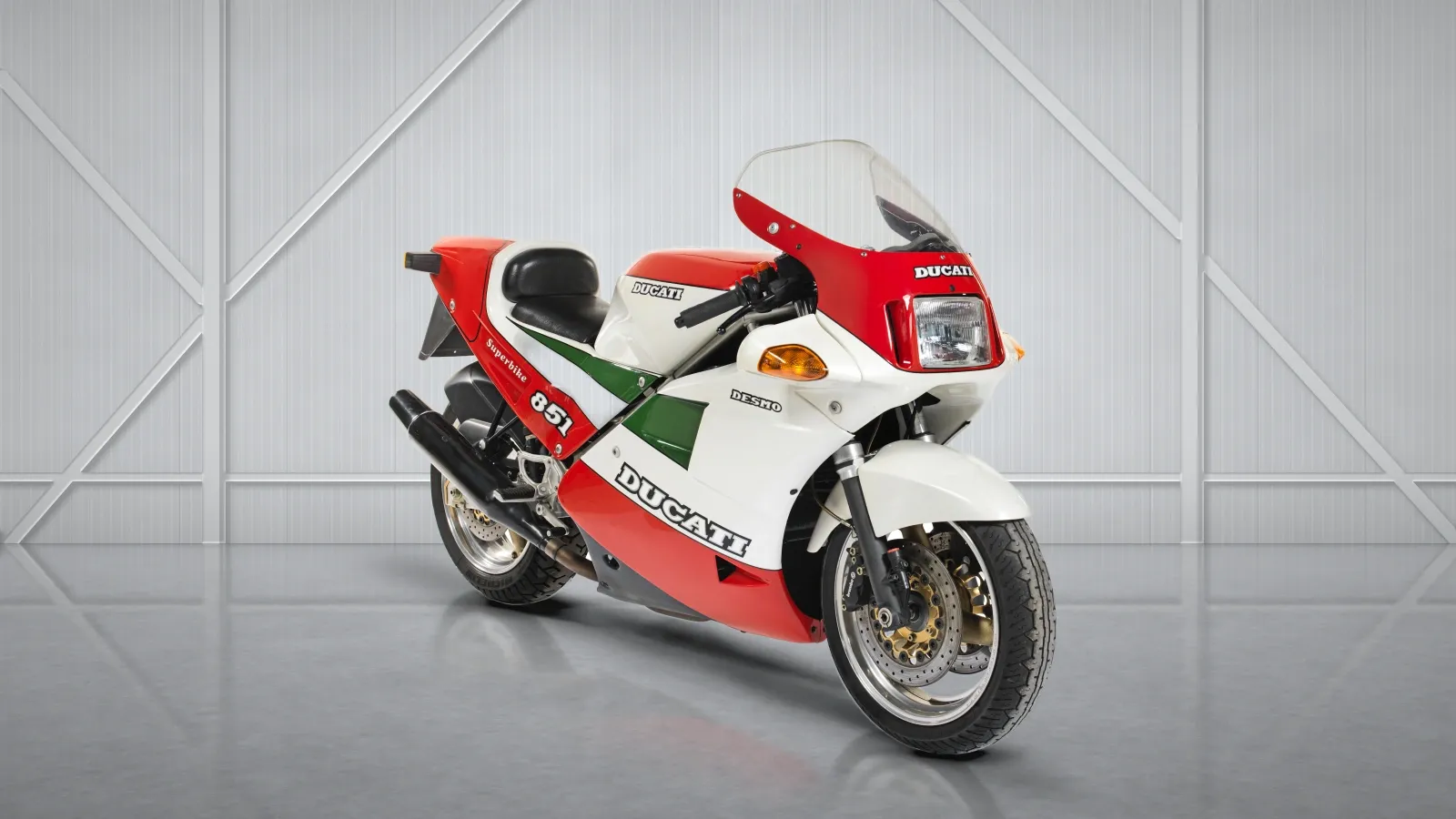
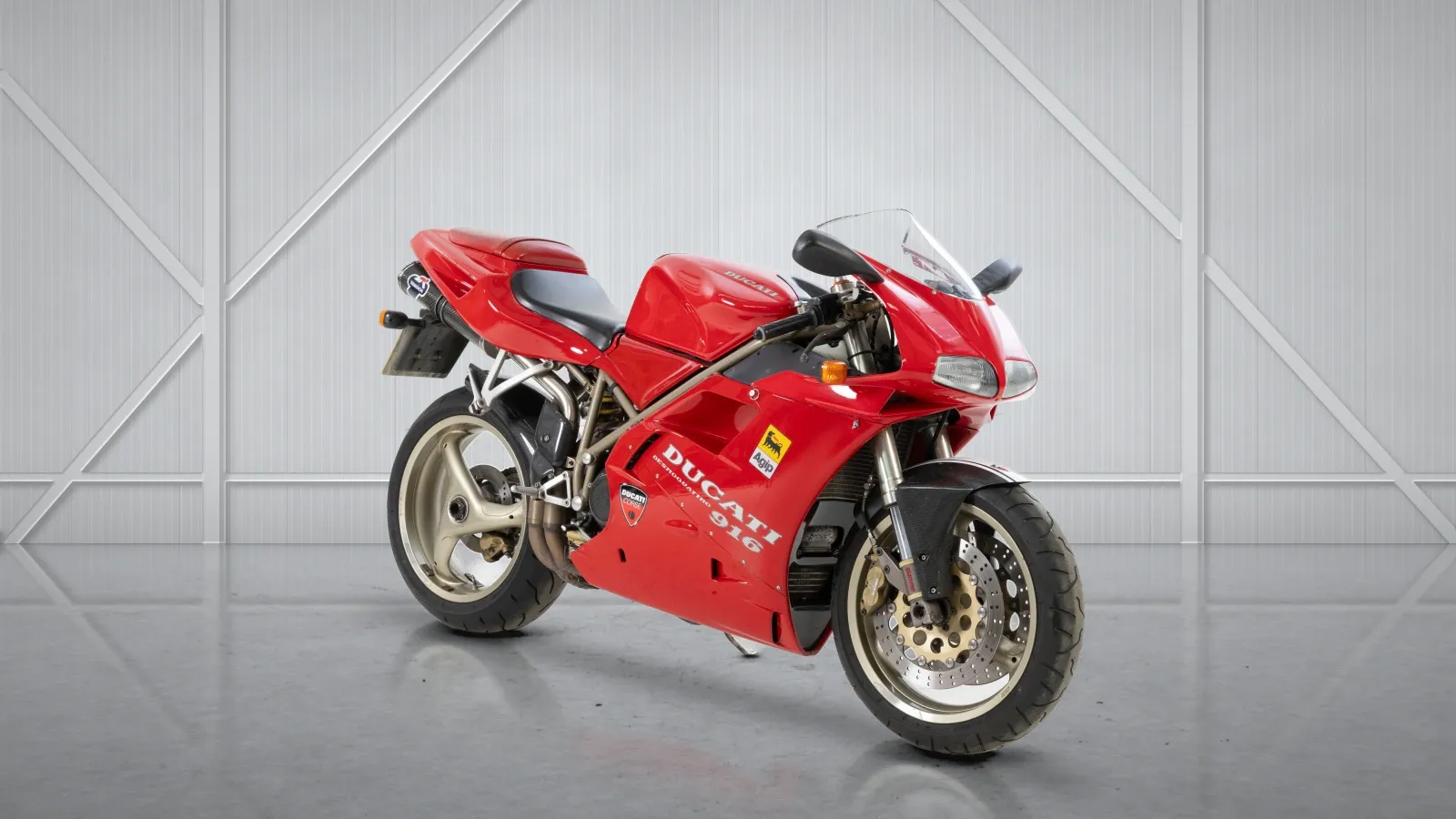
Ducati unveiled the first Panigale V4 for its 2018 range in November 2017 and later described 2018 as the model’s arrival on the market. The family then changed materially: MY2020 adopted revised aerodynamics, chassis settings and electronics, while the 2022 update brought another major round of engine, gearbox, aerodynamic and electronic changes.
The machine unveiled in July 2024 is Ducati’s seventh-generation superbike and is the motorcycle described here. Earlier Panigale V4s have their own figures.
What independent testers found
MCN’s 2025 Panigale V4 S review, updated 16 September 2024, describes Michael Neeves riding the V4 S at its world launch at Vallelunga. He reported a more compliant, stable chassis and highly developed rider aids, but the test motorcycle used Öhlins semi-active suspension and forged wheels rather than the standard V4’s chassis equipment.
The V4 S carries different suspension and wheels, so its measured figures describe that motorcycle rather than the standard V4.
Current UK status and model-year position
Ducati UK continues to list the standard Panigale V4 in its current range, and as of 18 September 2026 the UK page showed a £24,995 list price for the Ducati Red base motorcycle. Ducati labels that page MY25, while UK dealers list the same seventh-generation machine in their 2026 range. The technical figures here are the MY25 specification.
Buying and researching a seventh-generation Panigale V4
If you’re checking a seventh-generation Panigale V4, first establish that it’s the standard V4 rather than an S, R or special edition. Suspension, wheels, battery, clutch and other hardware can differ substantially, and accessory exhausts, software or track equipment need to be identified before you compare the bike with the factory road specification.
Ducati lists a 12-month annual service, an oil-service interval of 12,000 km or 24 months, and a valve-clearance check at 24,000 km for the seventh-generation Panigale V4. On a used bike, a documented service history, the correct standard equipment and a clear record of track or accessory changes are the checks that actually matter.