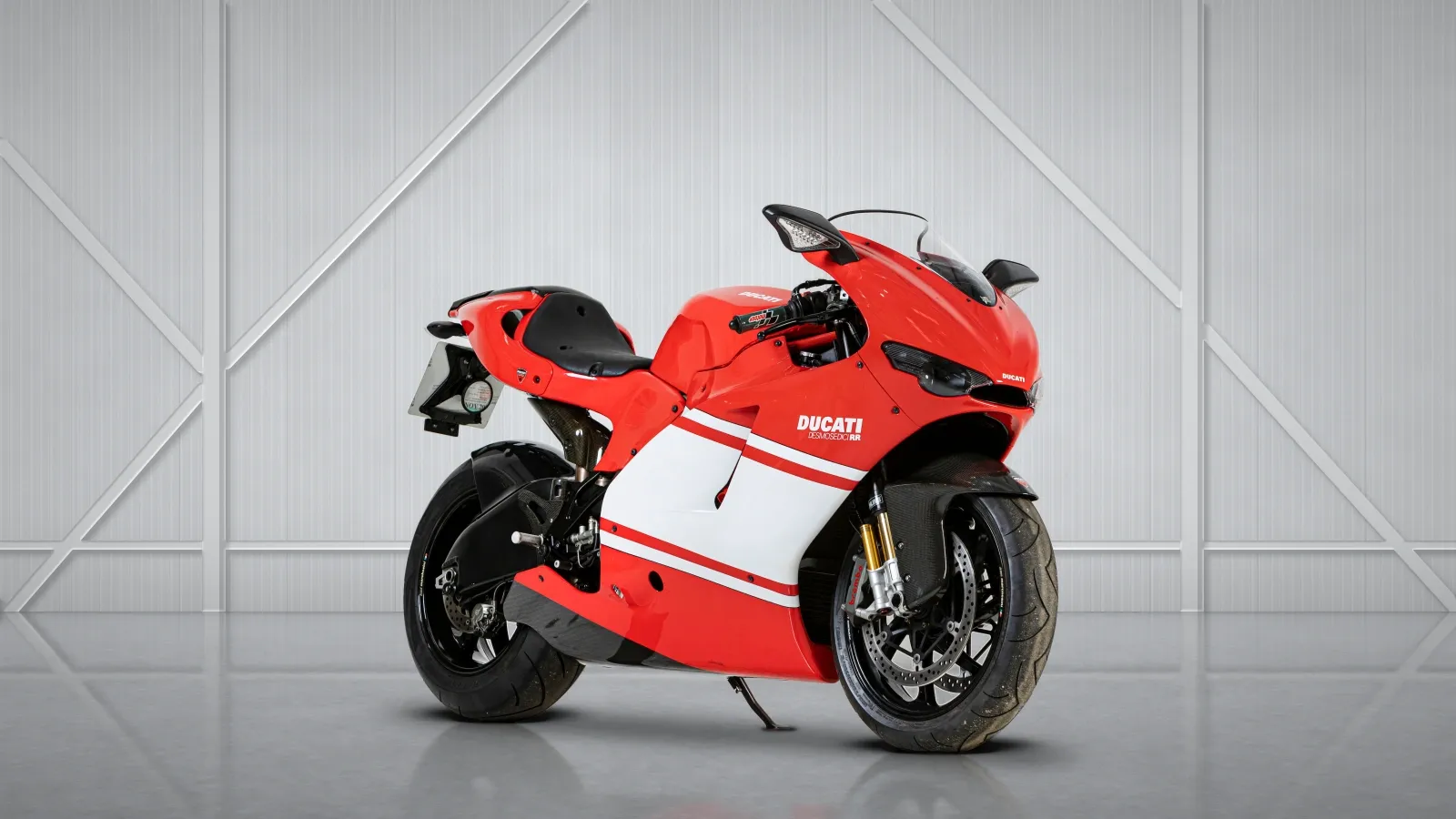
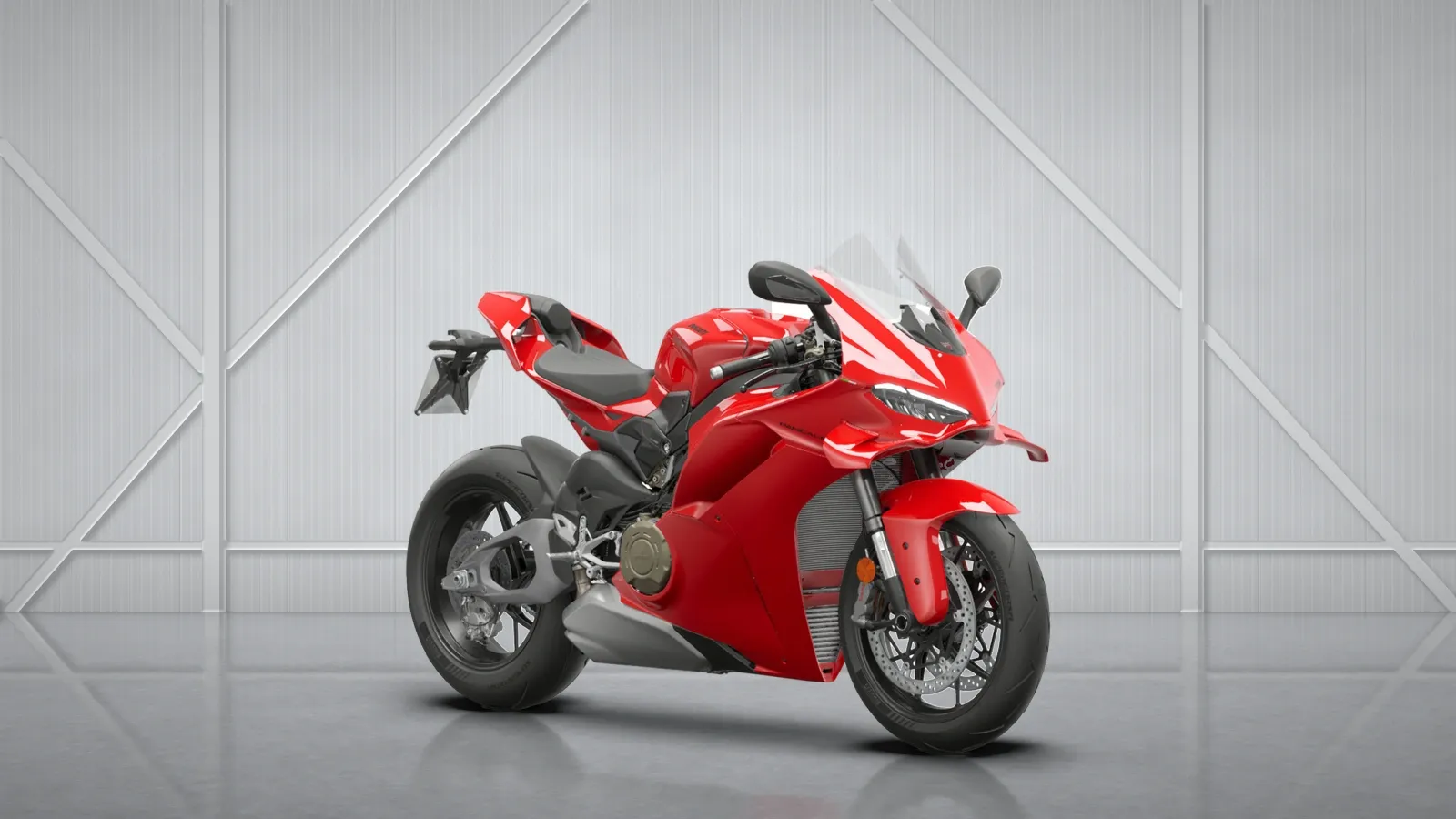
What is the Ducati Desmosedici RR?
The Ducati Desmosedici RR brought MotoGP-developed architecture into a limited-production road motorcycle, but the distinction between road and race still matters. Ducati’s own Heritage index classifies the RR as a road model and lists the Desmosedici GP race machines separately.
Here, the reference is the 2008 D16RR in EU/UK road specification. Every RR was also supplied with a racing exhaust and control unit, and that kit changes the engine’s output figures. So before you compare numbers, you need to know which state the bike is in.
From GP6 inspiration to a 2008 road motorcycle
Ducati announced a road-going Desmosedici project at World Ducati Week in 2004 and officially unveiled the RR in June 2006. Production began in the second half of October 2007, while period reporting said the first customers would receive their motorcycles in January 2008. Ducati presented the definitive RR as part of its 2008 range, and the surviving owner's manual is identified as a 2008 document.
That makes 2008 the recommended production-market introduction year. The earlier dates describe announcement, unveiling and factory production rather than normal customer availability.
The 989 cc D16RR engine
The road D16RR uses a 989 cc 90-degree V4 with an 86 x 42.56 mm bore and stroke, four valves per cylinder and gear-driven double overhead camshafts. The 2008 owner's manual gives a compression ratio of 13.5±0.5:1 and four 50 mm Magneti Marelli throttle bodies with one 12-hole injector per cylinder.
Ducati described the road engine as closely related to the GP6 architecture, including the bore and stroke, but the road motorcycle has its own homologated specification.
Standard road output and the supplied racing kit
The owner's manual separates the standard road engine from the racing-exhaust configuration. With the standard exhaust it lists 133 kW/180.8 hp at 13,750 rpm and 104 Nm at 10,500 rpm. With the racing exhaust it lists 147.1 kW/200 hp at 13,800 rpm and 116 Nm at 10,500 rpm.
Ducati supplied a racing kit with a 102 dB exhaust and dedicated control unit, but that kit is not the standard road configuration. Ducati published the 200 hp figure at the time as well, and still repeats it on its current Heritage pages, but the owner's manual is the document that separates the standard road engine from the racing-exhaust configuration.
Six-speed cassette gearbox and dry slipper clutch
The D16RR uses a six-speed constant-mesh cassette gearbox, a hydraulically operated dry multi-plate slipper clutch and chain final drive. The owner's manual gives a 30/54 primary ratio and a 16/44 gearbox-output-to-rear-sprocket ratio.
It also lists the homologated internal ratios as 14/40, 17/35, 20/32, 23/31, 22/26 and 23/25 from first to sixth. Special competition ratios were separate and are not part of the road specification.
Trellis chassis, Öhlins suspension and Brembo brakes
The road RR uses a hybrid tubular trellis frame in ALS 450 steel with forged steel plates. Ducati's period technical material says the frame geometry follows the GP6.
At the front is a 43 mm pressurised upside-down Öhlins fork with preload, rebound and high/low-speed compression adjustment and 120 mm of travel. The rear Öhlins unit provides rebound, high/low-speed compression and hydraulic preload adjustment, with 124 mm of rear-wheel travel.
Braking is by twin 330 mm semi-floating front discs with Brembo four-piston monobloc calipers and a 240 mm fixed rear disc with a Brembo caliper.
Magnesium wheels and the 16-inch rear tyre
The Desmosedici RR uses seven-spoke magnesium-alloy wheels. The front rim is MT 3.50 x 17 with a 120/70-ZR17 tyre; the rear is MT 6.25 x 16 with a 200/55-ZR16 tyre.
Ducati and Bridgestone developed special tyres for the RR. The 16-inch rear wheel was part of the road motorcycle's original specification.
Carbon construction, electronics and road equipment
Ducati used carbon fibre extensively in the bodywork and rear seat-support structure, while the engine combines sand-cast aluminium crankcases and heads with magnesium covers and titanium internal components.
The RR also carried a multifunction digital dashboard and Ducati Data Analyser capability. Ducati said the instrumentation drew from its GP7 project.
A numbered run of 1,500 motorcycles
Ducati fixed total Desmosedici RR production at 1,500 numbered motorcycles in October 2007 after orders exceeded the earlier reservation level. Current Ducati Heritage material describes the RR as produced in a limited series of 1,500.
Production started in October 2007 and deliveries were scheduled across 2008. The exact final production-end date is not established closely enough to populate a discontinuation year.
What period testers found
Michael Neeves rode the Desmosedici RR at Mugello in September 2007 and described a very stiff chassis with little feel until the motorcycle was pushed hard, together with heavy steering at lower intensity. Those observations come from one press test at a circuit.
MCN later took an RR onto public roads in March 2008, while Cycle World named the Desmosedici RR its Best Superbike of 2008.
Weight, fuel and maximum speed
The 2008 owner's manual describes the motorcycle's 171 kg figure as weight in running order without fluids and battery. Ducati's current Heritage pages call the same number dry weight. The period manual's wording is the more precise of the two.
The owner's manual gives a 15-litre fuel tank including a 4-litre reserve. Ducati's Heritage pages do not publish a maximum-speed figure for the road motorcycle.
Current status and buying a Desmosedici RR
The Desmosedici RR is a historical, discontinued limited-production motorcycle. Ducati UK listed it at £39,250 on the road, with prices stated as valid from 1 December 2008.
If you’re looking at an original example, check that the road equipment, supplied racing kit, magnesium wheels, suspension, bodywork, numbered identity and documentation all correspond to the motorcycle in front of you. Track conversions, replacement exhausts, ECU changes, quickshifters and tyre substitutions can change the specification materially.
A documented service history is the useful starting point. Period documentation included a dedicated service plan, and the surviving owner’s manual contains model-specific maintenance schedules. Ducati’s current dealer and parts arrangements are a separate question from what this motorcycle was when it left the factory.